More footage is not a better report. The useful recording captures what the report needs, with enough context to place it. Start from the handoff, then decide what to record.
Decide what the recording has to answer.
Pick the output before the input. A maintenance report, a scope for the estimator and an update for the office need different things.
Look at the report you already use. Which questions can a recording answer? Which need a measurement? Which need a person's call? Record for the first group. Don't pretend about the other two.
Open with context the office will recognize.
Job number, where you are, what this part covers. Moving to another unit? Say so. Use the labels the rest of the business uses.
Wide shot first, then the detail. A close-up of a fitting is clear and still useless if nobody knows which building it's in.
Say what you see. Flag what you think.
A spoken line carries what a photo can't: which item, what you noticed, why it matters. Keep it specific enough that someone can find the moment later.
Relaying the customer? Say that. Not sure yet? Say that too. Uncertainty in the recording stays uncertainty in the report, instead of turning into a fact.
Use a short sequence you can repeat.
No script. Just the same order every time, so the crew captures it and the reviewer can find it.
- Name the job and the area or equipment.
- Say what this visit is for.
- Capture the observations the report needs.
- Describe completed work separately from what's proposed.
- Close with open questions and what's still missing.
For a scope walk, add the customer's priorities and the limits of the request. For a service call, make clear what's done and what's still open.
Fit the capture to the work.
A phone is fine for a short walk. AR glasses help when both hands are busy. Pick by the view and the conditions, not by what looks good in a demo.
Follow the site's recording rules. Pick a moment that doesn't get in the way of the work. Then confirm the recording landed on the right job before anyone relies on it.
Judge the output, not the minutes.
After a few visits, ask the reviewer which observations helped and which questions still bounced back. Adjust the routine around the gaps.
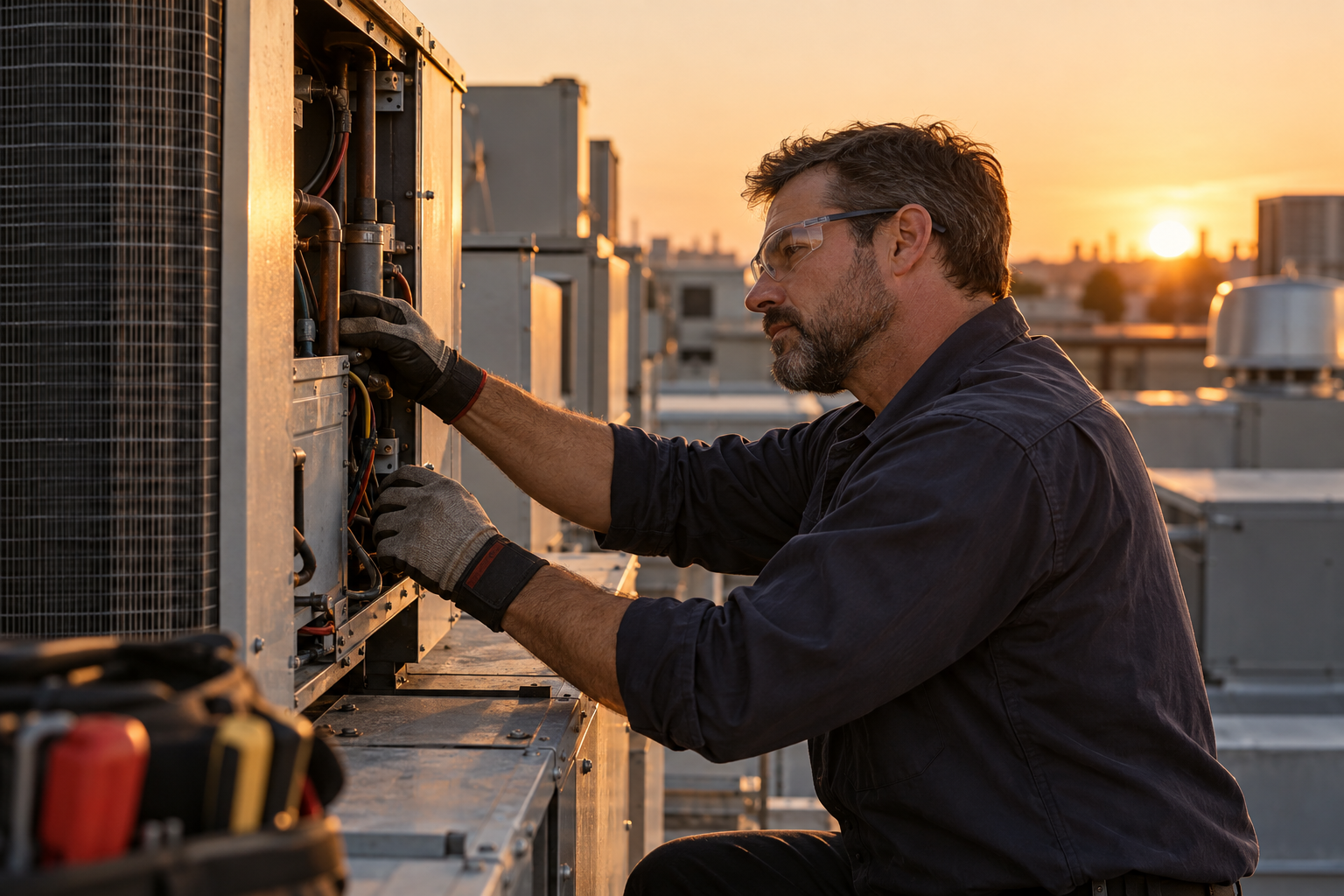
In our fictional HVAC sample, the unit is RTU-04 on the west roof. The photo shows dust on the pulled filter. The note says the replacement size still needs confirming. Location, observation, next action. That's the whole job of the recording.
Start with the report you already use.
See how a recorded visit becomes a draft. Then bring your report to our team.
See the exampleBook a free assessment